Across France and beyond, collectors and food lovers are hunting for old tins of sardines whose price has nothing to do with the supermarket shelf label.
Why some sardines age like fine wine
Most canned fish is designed to be eaten within a year or two. Vintage sardines are the opposite. They are made to wait.
Producers such as Pointe de Penmarc’h in Douarnenez, Brittany, put a specific year on the tin. That year is not a marketing slogan. It refers to the exact season when the fish were caught and packed.
Only one species is used: Sardina pilchardus, the European pilchard. These sardines are landed in the height of the season, usually between July and September, when the fish are naturally fattier and richer in flavour.
Vintage sardines are selected at peak season, then treated as a product that can genuinely improve over time.
They are brought ashore at dawn, then rushed straight to the cannery. The idea is simple: reduce the gap between sea and tin so the fish keep their texture and delicate taste.
Traditional methods that make a difference
What happens next separates a collectible tin from an ordinary one. Instead of industrial processing, many of these premium sardines are handled almost like a craft product.
The fish are prepared by hand: heads removed, guts taken out, carefully arranged in the tins. This is slow work, and it costs more than high-speed automated lines.
Before they are packed, the sardines are fried. This step helps firm the flesh and gives that slightly caramelised edge fans look for. Once in the tin, the fish are covered with extra-virgin olive oil chosen for its flavour as much as for preservation.
➡️ Schlechte nachrichten für einen rentner der einem imker land verpachtet hat er muss landwirtschaftssteuer zahlen ich verdiene damit kein geld eine geschichte die die meinungen spaltet
➡️ Diese einfache Gewohnheit hilft dem Gehirn beim Übergang ins neue Jahr
➡️ Wie oft senioren laut haushaltsratgeber ihr geschirrtuch wechseln sollten und warum viele ältere menschen das für völlig übertrieben halten
➡️ Wie der unscheinbare perlator dein trinkwasser mit biofilm und keimen füllt während alle weiter glauben leitungswasser sei sauber und kritik daran nur panikmache ist
➡️ Rentner muss für verpachtetes land an imker landwirtschaftssteuer zahlen und fühlt sich betrogen eine geschichte die die gesellschaft spaltet
➡️ Ein geplanter windpark spaltet eine ganze region und macht aus nachbarn erbitterte gegner die von verrat an der heimat sprechen
➡️ Wie eine kleine gewohnheit nach dem aufstehen deinen fokus und deine motivation im januar zerstört und warum du trotzdem nicht damit aufhören wirst
➡️ Warum deutsche mieter selbst schuld an ihrer wohnungskrise sind und sich trotzdem vom staat betrogen fühlen
The tins are then stored for months, sometimes years, in the producer’s warehouse. During this time, something subtle happens inside the metal walls.
As months pass, the sardines gently confit in the oil, becoming softer, rounder and more complex in taste.
Over six to eight years, the central bone starts to break down. The flesh turns almost spreadable, and the flavours deepen from simple “fishy” notes to something closer to roast nuts and buttered toast.
From pantry staple to collectible object
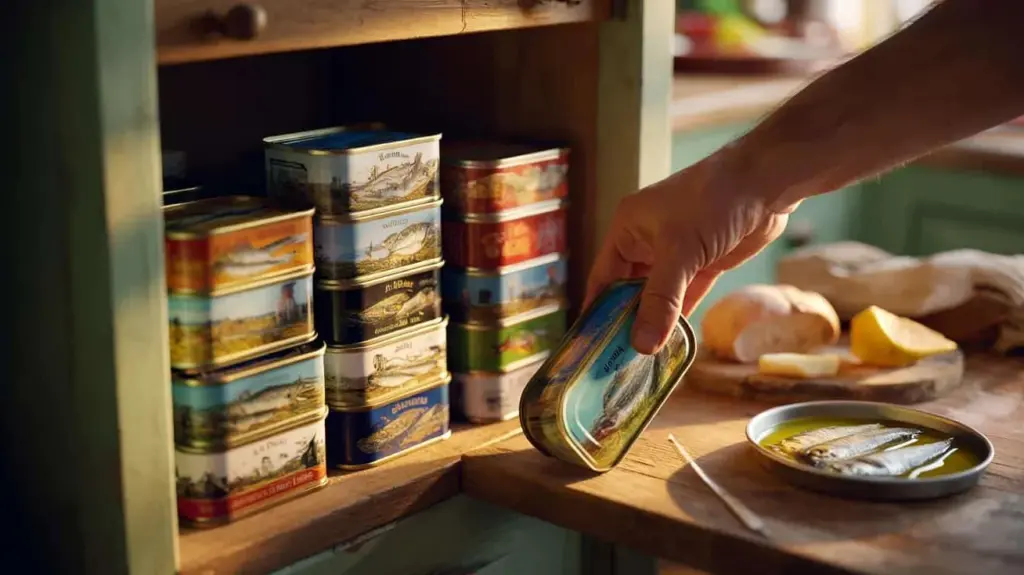
The story is not just culinary. It is also about design and rarity. Many vintage sardine producers release limited series each year, complete with original artwork on the tin.
At Pointe de Penmarc’h, for instance, every vintage is illustrated by a Breton artist. Once that year’s run is gone, it does not come back. The tins become a snapshot of a specific moment, both in fishing season and in graphic style.
That is where collectors come in. They even have their own names: puxisardinophiles or clupéophiles, both referring to sardine-tin enthusiasts.
Some collectors own hundreds of tins, kept not just for their contents, but for the limited-edition artwork on the metal.
Old designs, discontinued series and perfect-condition tins can fetch prices far higher than their original retail value, especially in regions with a strong sardine culture such as Brittany or Portugal.
How to check if your sardines might be valuable
If you are now eyeing the back of your cupboard, a quick look can tell you whether a tin is just dinner or a minor treasure.
- Look for a vintage year: a clear year printed on the front, not just a best-before date.
- Check the brand: names from sardine heartlands like Douarnenez or other historic ports can matter.
- Notice the artwork: illustrations signed by an artist, or themed series, tend to be more collectible.
- Condition counts: tins that are not dented or rusted and still have bright colours are more appealing.
- Age is a factor: tins over five to six years old start to interest both gourmets and collectors.
Food safety regulations still require a best-before date, often set at around five years. Yet many fans happily keep well beyond that, relying on intact packaging and their own judgment.
What aged sardines actually taste like
For those who open them, vintage sardines are less about bragging rights and more about texture and flavour. They feel different from a standard supermarket tin.
After several years, the flesh is softer, the oil thicker and better integrated. The bones almost disappear, so the fish can be eaten in one bite without any crunch.
Seasoned fans compare a mature tin of sardines to a good cheese: richer, subtler, and far more interesting than a young version.
Most connoisseurs recommend serving them very simply. The classic pairing is a slice of country-style bread, lightly toasted, with salted butter. Add a squeeze of lemon and perhaps a few sliced shallots, and that is enough.
Rough price ranges and realistic expectations
Not every old tin will pay for a holiday. Many will always be worth only their food value. Yet some can command a premium, especially if the artwork is sought-after or the series was short.
| Type of tin | Typical resale interest |
|---|---|
| Standard supermarket sardines, no vintage year | Little to no collectible value |
| Recent vintage sardines (1–3 years old) | Often sold at original price, kept to age |
| Well-known brand, 6–10 years old, limited artwork | Can sell for several times the initial price |
| Rare artist series or discontinued design | Most likely to interest serious collectors |
The market is still niche, closer to stamp collecting than to high-end wine auctions. Yet for a tin that cost a few pounds, a small increase can feel like a neat windfall — or a good story at dinner.
How to store tins that might gain value
Storage plays a double role: it keeps the fish edible and preserves the tin for collectors. A few basic habits can make a difference.
- Keep tins in a cool, dark, dry place.
- Avoid damp cupboards near the hob or dishwasher, which can encourage rust.
- Handle the tins gently to avoid dents.
- If you are aging them for taste, flip the tins every six months so the oil moves around the fish.
If a tin swells, leaks, feels sticky, or smells odd once opened, it should be thrown away. No vintage premium compensates for spoiled food.
Why collectors are drawn to sardine tins
Collecting sardines might sound eccentric, yet it blends several appealing elements. There is the nostalgia of old labels, the link to coastal towns, and the accessible price point compared with wine or art.
Each tin is both an object and a meal waiting to happen. Some collectors open part of their stash every year and replace it with new vintages, treating their cupboard like a rotating cellar.
For many enthusiasts, the pleasure lies as much in waiting and comparing years as in the financial side.
The hobby also connects to wider concerns about small-scale fishing and traditional food skills. Brands that focus on sustainable catches and careful manual work tend to attract more loyal fans.
Practical scenarios: eat it or keep it?
Imagine you find three tins at the back of a shelf: two cheap supermarket sardines from 2018 and one vintage tin from a Breton brand, clearly marked with the year and an artist’s illustration.
The plain tins, with no special design and no mention of a seasonal catch, are unlikely to hold any collectible value. As long as the packaging is intact and dates are acceptable, they are just dinner.
The vintage tin, if around six to eight years old and still in good shape, might be worth asking about on specialist forums or in foodie groups. You may decide the rare experience of tasting a properly aged sardine is worth more to you than any resale.
For anyone starting to pay attention to those modest tins in the cupboard, the choice is now more interesting: open and enjoy, or wait and watch the value — and the flavour — quietly build.