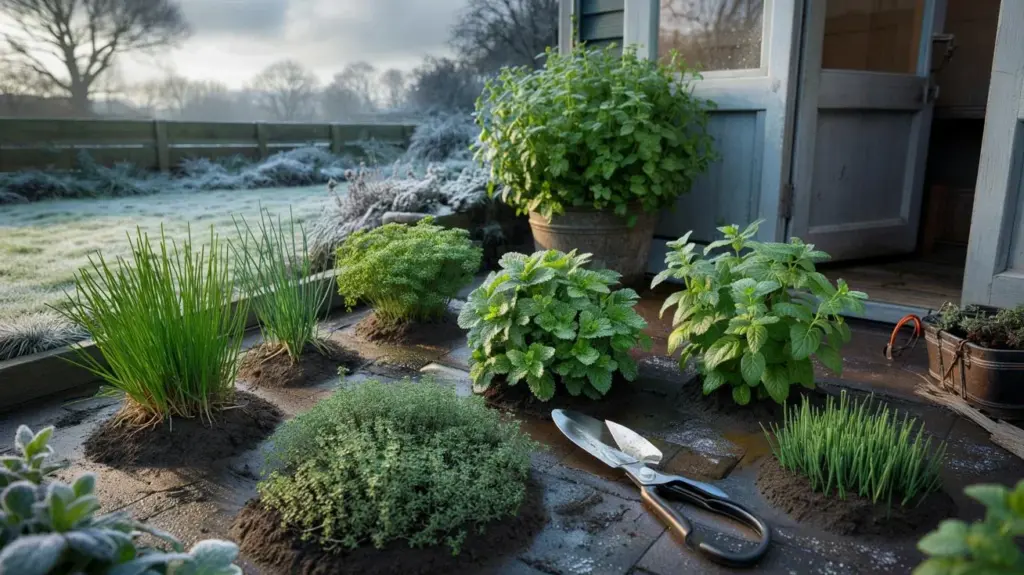
While most people are still scrolling seed catalogues and waiting for warmer days, some herbs can be planted once and harvested for years, shrugging off frost and waking up before the rest of the garden.
Why late winter is secretly a great time for herbs
In late January and February, British and American gardens look half-abandoned: soggy soil, bare beds, and the odd leek or kale clinging on. That doesn’t mean nothing is happening.
Below the surface, hardy perennial herbs are storing energy, waiting for the light to lengthen. Once temperatures hover just above freezing, they push out new shoots long before most annual crops even germinate.
Plant the right herbs once, and you can step outside in February with a pair of scissors and come back with fresh flavour.
For anyone short on time, this is a quiet revolution. Instead of fussing over seed trays on windowsills or heated propagators, you let deep, well-established roots do the work.
The seven herbs that earn their keep year after year
Not all herbs behave the same way. Some are tender, sulk at the first frost, and need re-sowing every year. Others behave like old friends: they might vanish in winter, then reappear without drama as soon as conditions improve.
Here are seven robust herbs that, once planted, will keep coming back and often start producing when the rest of the garden still looks asleep.
| Herb | Type | Key strength |
|---|---|---|
| Chives | Perennial | Early shoots, very hardy |
| Sorrel | Perennial | Sharp, lemony leaves from late winter |
| Parsley (curly) | Biennial, treated as short-lived perennial | Stands cold if well rooted |
| Mint | Perennial | Spreads vigorously, comes back from roots |
| Thyme | Perennial | Often evergreen, very aromatic |
| Oregano | Perennial | Hardy, Mediterranean flavour |
| Tarragon (French) | Perennial | Dies back in winter, strong aniseed notes in spring |
Chives: the first green spikes through the cold
Chives are usually the earliest to appear. Thin, hollow leaves punch straight through thawing soil and even the odd dusting of snow.
You can clip them regularly from late winter. They quickly regrow, thanks to a dense cluster of bulbs that store reserves through the cold months.
➡️ Canada shifts up a gear on nuclear fusion as first pure‑play fusion firm heads for stock market
➡️ This “impossible” French aircraft promises 11 times less energy use
➡️ In the desert, they are building an “artificial sun” to power cities
➡️ Airfryer schlägt backofen beim stromverbrauch
➡️ Wein wird teurer verbraucher zahlen winzer zittern der staat kassiert
➡️ With this ship, China could gain a head start in ocean exploration
➡️ Schlechte nachrichten für einen rentner der einem imker land verpachtet hat er muss landwirtschaftssteuer zahlen fühlt sich vom staat verraten und bringt sogar freunde und familie gegeneinander auf
➡️ Warum der wunsch nach sicherheit im job deine karriere ruiniert und weshalb bequemlichkeit keine entschuldigung mehr ist
A clump of chives near the back door turns plain eggs, potatoes or cheese on toast into something that feels cooked on purpose.
Sorrel: lemon without the lemon
Sorrel is still underrated in the UK and US, yet it behaves like a small, evergreen engine whenever conditions allow. New leaves appear from late winter, often long before lettuces are ready.
Its sharp, acidic flavour works well in omelettes, cream sauces for fish, or blended into a quick soup with potatoes. Young leaves are milder and more tender; older leaves turn stronger and slightly tougher.
Parsley: tougher than it looks
Flat-leaf parsley is popular with chefs, but curly parsley usually handles cold better. If planted in decent soil and watered well in its first season, it can push through winter and burst into fresh growth from late January onwards.
It is technically biennial, so it will send up flower stalks in its second year and then fade. For continuous supply, gardeners often stagger new plants each year while leaving bigger clumps to produce early leaves.
Mint: vanishing act, then sudden takeover
Mint above ground often dies back completely with the first hard frosts. That doesn’t mean it is gone. Beneath the soil, creeping stems sit ready to run.
As soon as the weather softens, new shoots appear everywhere the roots have spread. Because of this invasive habit, many gardeners keep mint in large pots or bottomless containers sunk into the ground to control it.
The Mediterranean trio: thyme, oregano, tarragon
Thyme and oregano come from dry, sunny regions, but selected hardy varieties cope well with British rain and cold if the soil drains freely.
- Thyme often keeps its leaves all winter, so you can snip small sprigs even in January.
- Oregano may look scruffy above ground, yet underground stems help it reshoot quickly in spring.
- Tarragon usually disappears in winter, then re-emerges from its crown once the soil warms.
Planted together in a sunny strip, thyme, oregano and tarragon give you a permanent, low-maintenance flavour bar for roast meats, pizzas and slow braises.
How these herbs “manage themselves” once established
The secret behind these plants is their root system. Deep roots and woody crowns act like batteries, storing energy in late summer and autumn before dropping into dormancy.
As daylight increases towards the end of January, hormonal signals inside the plant switch from survival mode to growth. Stored reserves power new shoots long before the soil would be warm enough for seeds to sprout.
Your role is surprisingly small. A basic routine is enough:
- Trim and remove dead stems in late winter to let light reach the base.
- Mulch lightly around the plants to protect roots and keep moisture.
- Avoid waterlogging by improving drainage, especially for Mediterranean herbs.
This low-intervention approach means fewer seed trays, less plastic, less watering, and herbs that largely fend for themselves once they settle in.
Turning a grey February kitchen into something special
By late winter, many households are living on root vegetables, tinned tomatoes and frozen peas. Fresh herbs cut from just outside the back door can shift the mood of a meal in seconds.
Some simple pairings:
- Chives finely snipped over baked potatoes, scrambled eggs or cream cheese.
- Sorrel stirred into cream at the last minute for a sharp, green sauce with salmon or chicken.
- Curly parsley chopped into winter grain salads with lentils or barley.
- Thyme and oregano added early to stews, soups and slow roasts.
- Mint leaves crushed in hot water with a slice of lemon as a caffeine-free evening drink.
When supermarket herbs are flown in or grown in heated glass, a handful of homegrown leaves feels both thrifty and oddly luxurious.
This week’s job: planting for years, not months
If your garden or balcony doesn’t yet have these seven herbs, late winter is a smart time to fix that. Seed sowing indoors is one option, but buying small potted plants skips a lot of faff.
As soon as the ground is not frozen or waterlogged, you can plant:
- Chives and sorrel in fertile, moist soil.
- Thyme and oregano in lighter, well-drained spots or raised beds.
- Mint in containers to stop it overrunning everything else.
- Tarragon and parsley in areas that get a mix of sun and light shade.
Handled this way, a one-off spend on herb plants turns into several years of regular harvests, without the annual ritual of re-sowing and re-potting.
Little risks, big pay-off
There are a few points to watch. Very heavy clay that stays wet can rot the roots of thyme and oregano, so adding grit or planting on a slight mound helps. Harsh, drying winds can scorch evergreen foliage; a bit of shelter from a wall or hedge makes a difference.
Slugs and snails mostly leave aromatic herbs alone, but young sorrel and parsley can be targeted, especially in damp springs. A mix of hand-picking, rough mulch and good airflow keeps pressure down without chemicals.
Practical combinations and everyday scenarios
These herbs work well together in small spaces. A simple layout for a beginner might be:
- A large pot by the kitchen door with mint in the centre and chives around the edge.
- A sunny raised bed strip with thyme at the front, oregano in the middle, and tarragon towards the back.
- A corner of a vegetable bed reserved for sorrel and parsley, where they can spread a little.
Imagine stepping out on a cold Tuesday evening, grabbing thyme and oregano for a tray of roasted vegetables, then clipping chives for tomorrow’s omelette on the same quick trip. That is the quiet benefit of a perennial herb patch: small, frequent wins with almost no drama.
For new gardeners, these plants also act as a forgiving training ground. They tolerate the odd missed watering, imperfect pruning, or slightly poor soil. You learn how plants behave through the seasons, and they still pay you back with leaves on the plate.